

Youth Flat Track Paddock
A Paddock Safety Loop Before Youth Flat-Track Practice
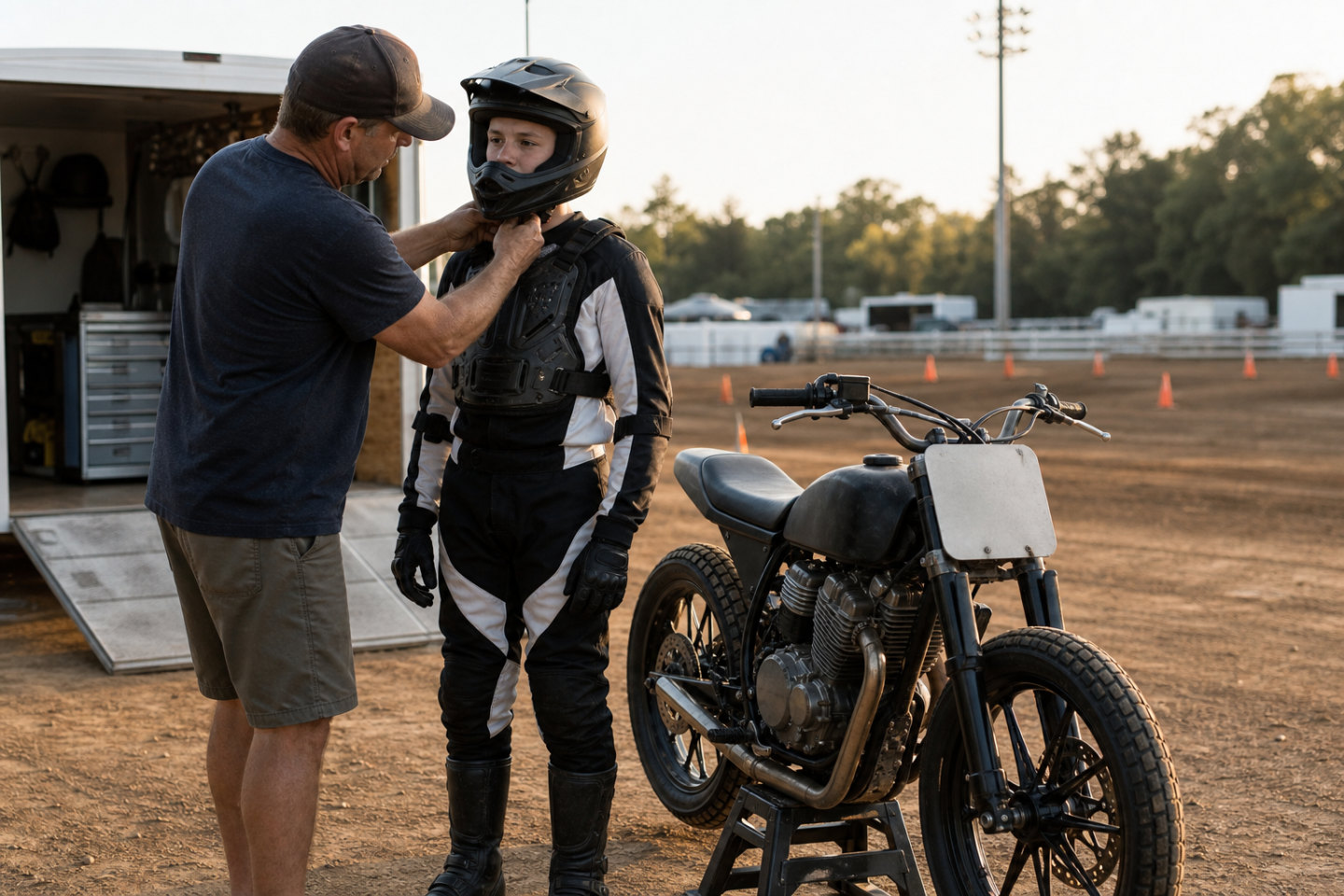
AUGUST 18, 2026... A busy paddock makes small problems easy to miss. A repeatable safety loop gives a youth rider and the adults supporting them one calm pass around the person, the motorcycle and the space before anyone moves toward staging.
The loop is not a substitute for the event rulebook, technical inspection, qualified mechanical work or medical care. It is a practical pause that helps a family crew notice change: a strap that no longer sits correctly, a control that feels different, a hot rider who needs recovery time, or a pit lane that is no longer clear.
Begin With a Stationary Work Zone
Put the motorcycle on its normal secure stand, engine off, with enough room for the rider and one adult to move around it without stepping into an active lane. Helmets, tools, fuel containers and spare parts should not narrow the route used by other riders. The aim is a small, predictable work zone rather than a larger claim on the paddock.
Before the check starts, identify the path from the stand to staging and the path back. If a trailer door, tow vehicle or neighboring bike has changed that route, reset the space first. A rider should not receive new directions while rolling past an obstruction.
Check Equipment by Function
Start at the helmet and work downward in the same order. The adult confirms that the helmet is the rider's current, properly fitting equipment and that the retention system is fastened as intended. The rider then moves their head, shoulders, hands and feet and says whether any item pinches, shifts, restricts a control movement or feels different from the previous session.
Do not turn this into a visual costume check. Boots must allow the rider to use the controls; gloves must allow a normal grip; protective equipment must remain in position when the rider moves. The AMA's current Racing Rulebook resource page and the organizer's supplemental instructions remain the controlling references for event equipment and class requirements.
Let the Rider Operate Every Control
With the motorcycle still secured and the engine off, the rider demonstrates the normal reach and motion of each control used in the session. The adult watches for an awkward stretch, a lever position that changed, a cable or hose that interferes, an unexpected loose part, a leak, or damage that needs a qualified inspection.
This is a stop-or-pass check, not a paddock repair tutorial. If something is uncertain, keep the motorcycle out of staging until the responsible mechanic or event official resolves it. The schedule does not make an uncertain machine ready.
Plan for Heat Before the Gear Goes On
Protective gear changes how quickly a rider can shed heat. Set the shade and water location before the session and decide when the rider will remove the helmet and outer layers after returning to the stand. The American Academy of Pediatrics' guidance on hydration during sports and heat recommends drinking before, during and after activity and gives age-specific ranges as a planning reference.
Numbers do not replace observation. A rider who feels unwell, unusually tired, dizzy, confused or unable to recover normally does not need another lap to prove it. Move them out of the heat and follow qualified medical and event guidance. Adults working in the paddock need the same water, shade and recovery plan.
Name the Emergency Roles and the Access Point
Every practice site needs more than a phone somewhere in a trailer. One adult should know the exact venue address or location description, the gate an emergency vehicle can use, who meets responders, where event medical help is located, and who stays with the rider. The National Athletic Trainers' Association's youth sports emergency recommendations emphasize written emergency action plans, trained leaders and access to appropriate emergency equipment and medical services.
Keep the plan short enough to use. Say the names and the access point out loud before riding begins. If the venue layout or personnel have changed, the old plan is not automatically today's plan.
Agree on One Stop Signal
The rider and adults should share one visible stop signal and know which event signals take priority. A stop can be called for the rider, the motorcycle, the track, weather or another person's unsafe movement. The signal should lead to a known action: do not launch, leave the course as directed, or return to the stand and shut down.
For a possible head injury, the decision is not negotiated in the paddock. CDC HEADS UP response guidance says to remove an athlete from participation immediately when concussion is suspected, check for danger signs, and keep the athlete out the same day and until cleared by a healthcare provider.
Close the Loop After the Session
When the rider returns, the same adult asks three questions: did anything feel different, did any signal or lane instruction become unclear, and does any equipment need attention before another session? Record a specific issue instead of relying on memory. A short note such as “right glove bunches at throttle” or “return lane blocked by trailer” gives the crew something concrete to correct.
The post-session check also prevents the next pre-session loop from starting with an old problem. If the motorcycle, equipment or rider needs further assessment, mark that condition clearly and keep the bike out of the ready line.
The Seven-Point Paddock Loop
- Motorcycle secure on its stand, engine off, work zone clear.
- Helmet retention, protective equipment, boots and gloves checked by function.
- Rider demonstrates normal reach and operation of every control.
- Shade, water and the post-session cooling place are ready.
- Venue access point, medical help and named adult roles confirmed.
- Rider repeats the agreed stop signal and response.
- After the session, changes are recorded before another launch.
A useful safety loop is deliberately ordinary. It uses the same order on a quiet practice afternoon and on a crowded race weekend, so a young rider learns that stopping to check is part of being prepared—not evidence that anyone has failed.
Use the current organizer instructions, governing competition rules, qualified mechanical judgment and professional medical guidance for the actual event. This editorial checklist does not replace them.